After reading Murakami’s “On a Stone Pillow,” I found myself drawn to the quiet emotional weight carried through tanka. The way ordinary encounters are preserved in a succinct, emotive format felt especially accessible to me.
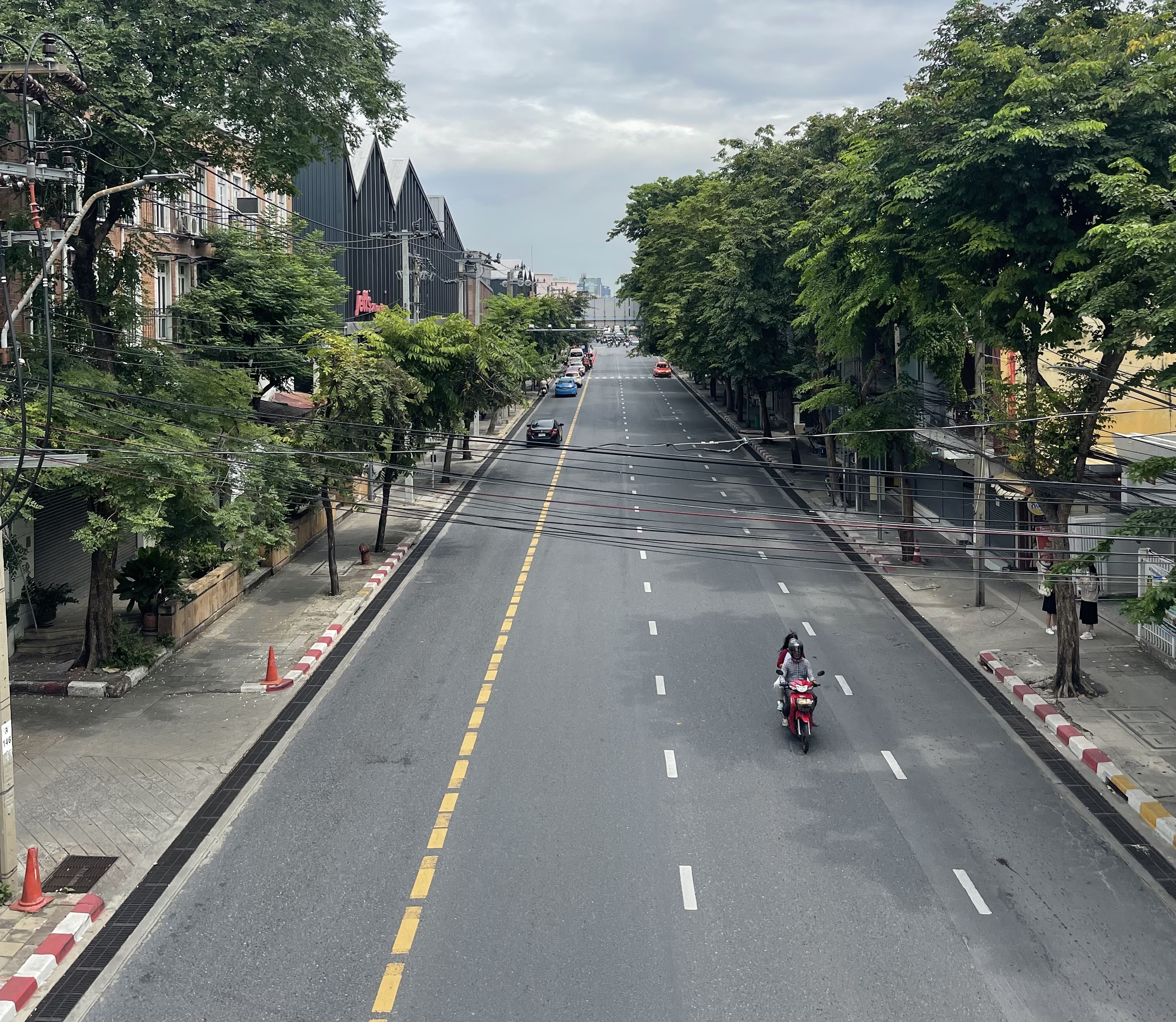
When I travel, I find that everyday encounters often reveal a place’s essence best, yet they’re also the hardest to capture in photographs or words. On my first trip to Bangkok, I began writing tanka to capture fleeting impressions and preserve the feeling of the experience. The form’s brevity made it easy to jot down moments, observations, and encounters in my Apple Notes app as I moved through daily life.
With all this in mind, please enjoy my impressions of Bangkok in the below excerpt entitled Thailand in Tanka.
Thailand in Tanka
Fruit Vendor on the Steps of the Victory Monument BTS
Alone atop the steps,
eyes tracing the moving crowd.
One traveler’s small act—
and she shines, not for herself,
but in the blessing of others.
Working Woman at Wat Arun Dock
Can you roll your R’s,
and speak the ancient language
passed down through time’s hands—
the one still whispered softly
in the land once called Siam?
Doorman at Maestro 07
A smile every day,
each time the door swings open.
Is it possible?
Can one be so truly glad?
What secrets could he share?
Woman on the Elevator
Spirited girl,
lights up even with strangers.
“Did you have fun today?”—
a welcome communication
in a foreign land.
Filipino Band at Asahi Beer Garden
Beautiful English,
each word feels like coming home.
If I hadn’t asked,
I’d swear we were both plucked
from a shared homeland.
Asok Market
Familiar faces,
when one happens to pass by,
soothe this quiet ache.
Where does this feeling come from?
Maybe I miss home.


More on Tanka
Tanka is a traditional Japanese poetic form that predates haiku. It dates back over a thousand years, becoming especially prominent during the Heian period (794–1185). It follows a 5–7–5–7–7 syllabic structure and was historically used in courtly Japan for personal expression, particularly in love letters, emotional reflection, or private communications where direct speech was often avoided.

Unlike haiku which tends to capture a single moment or image, tanka traditionally allows for a slight expansion or emotional turn in its final two lines. This makes it especially suited to introspection and subtle emotional depth. Over time, it has remained a form closely associated with intimacy, memory, and fleeting experience—qualities that align closely with Murakami’s use of it in his work “On a Stone Pillow” found in First Person Singular.
Leave a Reply